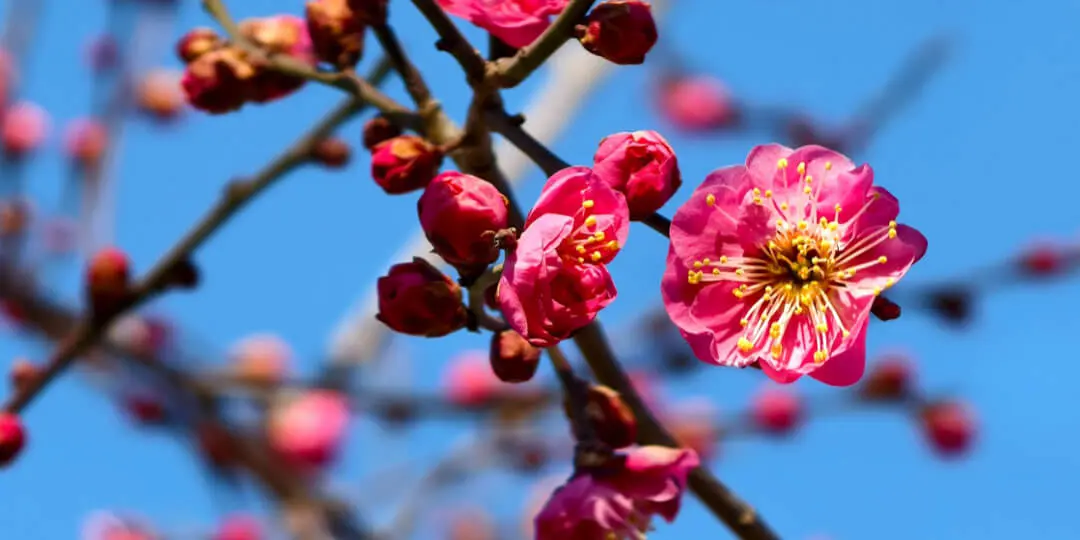
The Plum Blossom: Resilience in the Harsh Winter
While most flowers bloom in the warmth of spring, competing for color and attention, the Plum Blossom (梅花) chooses a completely different path. It blooms in the dead of winter, defying freezing winds and heavy snow.
This unique botanical trait made the plum blossom one of the most revered symbols in Chinese culture, representing moral strength, solitude, and the ability to thrive under severe adversity.
1. The First of the Four Gentlemen
In traditional Chinese art and literature, four plants are elevated to the status of “The Four Gentlemen” (四君子): the Plum Blossom, Orchid, Bamboo, and Chrysanthemum.
Among them, the plum blossom holds the premier position because it heralds the return of spring. Its faint, fragrant perfume (暗香) wafting through the freezing winter air was seen as a miracle of vitality amidst death.
2. A Metaphor for the Integrity of Scholars
For exiled officials and persecuted scholars, the plum blossom became a reflection of their own lives. Just as the flower blooms alone without competing with spring blossoms, a true scholar maintains their integrity without seeking worldly fame or flattering those in power.
The Song Dynasty poet Lu You (陆游) captured this noble solitude in his famous poem Ode to the Plum Blossom:
Zero into dust and crushed to sand, Only its fragrance remains as before. (零落成泥碾作尘,只有香如故)
Even when destroyed by harsh forces, the inner purity and spirit of the plum blossom remain uncorrupted.