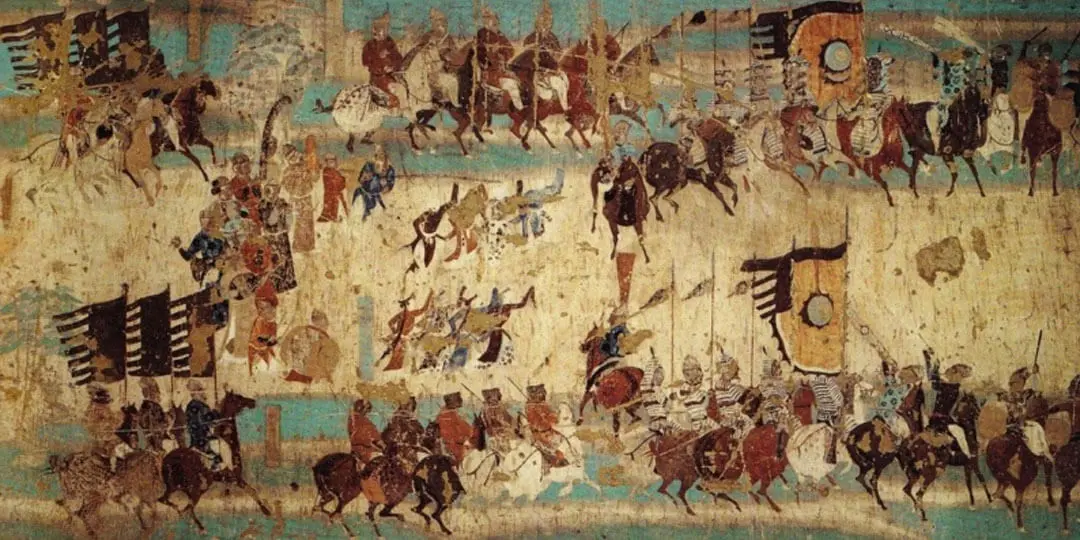
The An Lushan Rebellion: The Fall of Tang and the Birth of Poetic History
In the winter of 755 AD, General An Lushan marched his 150,000 troops south from the northern frontier, launching a rebellion that would tear the Tang Empire apart. Within months, the capital cities of Luoyang and Chang’an fell, Emperor Xuanzong fled into exile, and millions lost their lives.
The An Lushan Rebellion (安史之乱) was not merely a military conflict; it was the psychological turning point of Chinese civilization. Overnight, it ended the golden age of High Tang romanticism and gave birth to “Poetic History.”
1. The Shattering of the Golden Dream
Before 755 AD, Tang poetry was defined by boundless energy, confidence, and romantic idealism. Poets believed the empire was invincible and that personal success was guaranteed.
The rebellion destroyed this illusion instantly. Court poets became refugees overnight; famous scholars were captured by rebels, and the opulent palaces were reduced to ashes. The sudden contrast between peak prosperity and total devastation shocked the literary world to its core.
2. Du Fu and the Concept of “Poetic History”
No poet documented this catastrophe with greater humanity than Du Fu. While fleeing through war-torn countrysides, he recorded the raw suffering of ordinary people rather than focusing solely on imperial politics.
In his famous sequence Three Officers and Three Farewells (三吏三别), he described old women being dragged away to cook for soldiers, and young brides separated from their husbands the morning after their wedding.
Because his verses served as a precise, empathetic record of social reality during the war, later historians coined the term “Poetic History” (诗史) to describe Du Fu’s work.
3. The Shift in Aesthetic Values
After the rebellion was finally suppressed in 763 AD, Tang poetry never returned to its original reckless optimism. The tone shifted permanently toward introspection, social critique, and historical sadness.
The war proved that human political glory is temporary, prompting subsequent generations of poets to search deeper for spiritual meaning, philosophical truth, and personal authenticity.