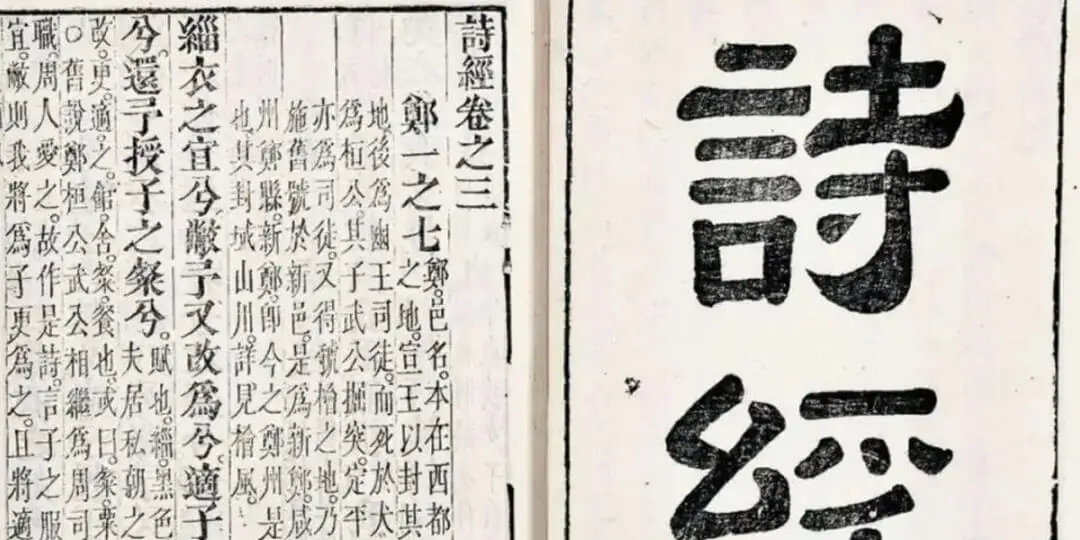
The Classic of Poetry (Shijing): The Dawn of Chinese Literature
If you want to trace the absolute origin of Chinese literary aesthetics, all roads lead to a single, ancient text: the Classic of Poetry (诗经, Shījīng), also known as the Book of Songs.
Compiled around the 11th to 7th centuries BC (during the Zhou Dynasty), it is the oldest existing collection of Chinese poetry, comprising 305 works. According to legend, it was personally edited and curated by Confucius himself to serve as the ultimate moral and artistic textbook for future generations.
The Three Pillars: Feng, Ya, and Song
The anthology is divided into three distinct sections, capturing the entirety of ancient Chinese society:
- Feng (风 - Airs of the States): Folk songs collected from various feudal states. These are the most beloved poems in the collection, dealing with authentic human emotions: young peasants falling in love, soldiers complaining about endless wars, and farmers worrying about the harvest.
- Ya (雅 - Odes): Formal, aristocratic poems performed at royal banquets and court ceremonies, focusing on politics, history, and the duties of the nobility.
- Song (颂 - Hymns): Solemn, ritualistic hymns sung in temples to praise the gods and ancestral spirits.
The Aesthetic DNA of a Civilization
The Shijing established several crucial techniques that would define Chinese poetry for the next three millennia. The most important is Xing (兴)—the technique of starting a poem with a seemingly unrelated image from nature (like a crying bird or a bending willow) to evoke the human emotion that follows.
Its opening poem, Guan Ju (关雎), begins with the call of ospreys on a river island before transitioning into a young man’s yearning for a beautiful, virtuous maiden. This exact method of intertwining the natural world with human desire became the unbreakable DNA of all classical Chinese verse.