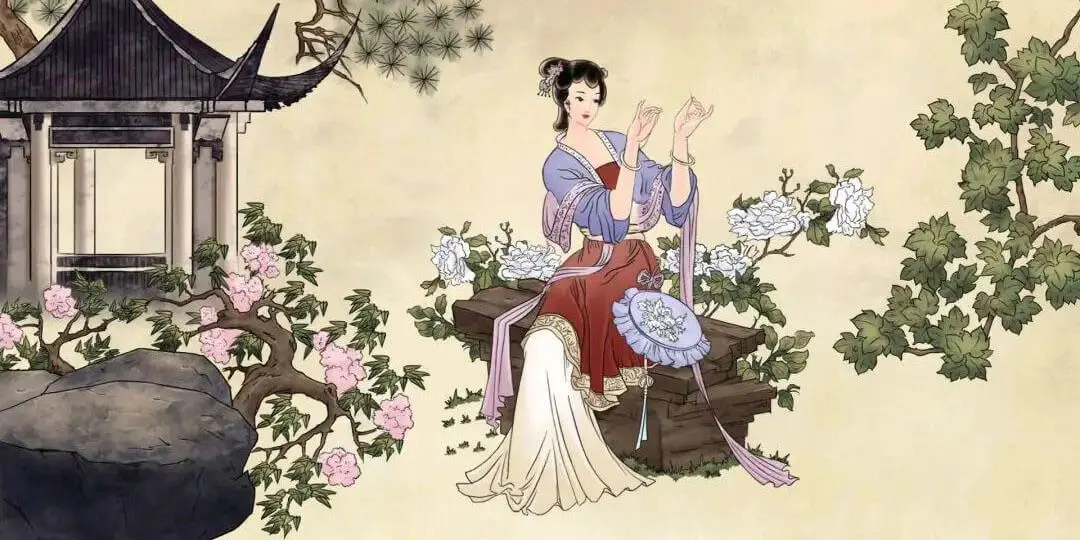
Peacock Flying Southeast: The Longest Ancient Narrative Poem
While classical Chinese poetry is globally famous for its short, intensely lyric forms (like the four-line Jueju), there is one monumental exception. Peacock Flying Southeast (孔雀东南飞, Kǒngquè Dōngnán Fēi) is a staggering 353-line epic written at the end of the Han Dynasty (around the 3rd century AD).
It holds the undisputed record as the longest narrative poem in ancient Chinese history and is hailed as the absolute pinnacle of the Yuefu (folk ballad) tradition.
A Tragedy of Filial Piety and Love
The poem tells the true, devastating story of a young official named Jiao Zhongqing and his brilliant, weaving-master wife, Liu Lanzhi.
Despite their deep love for each other, Jiao’s tyrannical mother inexplicably despises Lanzhi and forces her son to divorce her. Bound by the suffocating societal rules of “filial piety” (absolute obedience to parents), Jiao is powerless to resist. He promises Lanzhi that if she returns to her family temporarily, he will eventually find a way to bring her back.
However, once Lanzhi returns home, her own greedy brother forces her into a lucrative arranged marriage with a wealthy governor’s son.
The Ultimate Defiance
Realizing that society will never allow them to be together, the two lovers choose the ultimate act of defiance. On the eve of her forced wedding, Lanzhi drowns herself in a pond. Upon hearing the news, Jiao Zhongqing hangs himself from a courtyard tree.
The poem concludes with a haunting, romantic image: the two lovers are buried together, and the branches of the pine and cypress trees above their tomb intertwine. Two birds, known as mandarin ducks (a symbol of eternal love), nest in the branches, singing to each other every night.
Peacock Flying Southeast is not just a masterpiece of storytelling; it is a profound, furious indictment of the feudal marriage system, securing its place as the greatest tragedy ever recorded in Chinese verse.