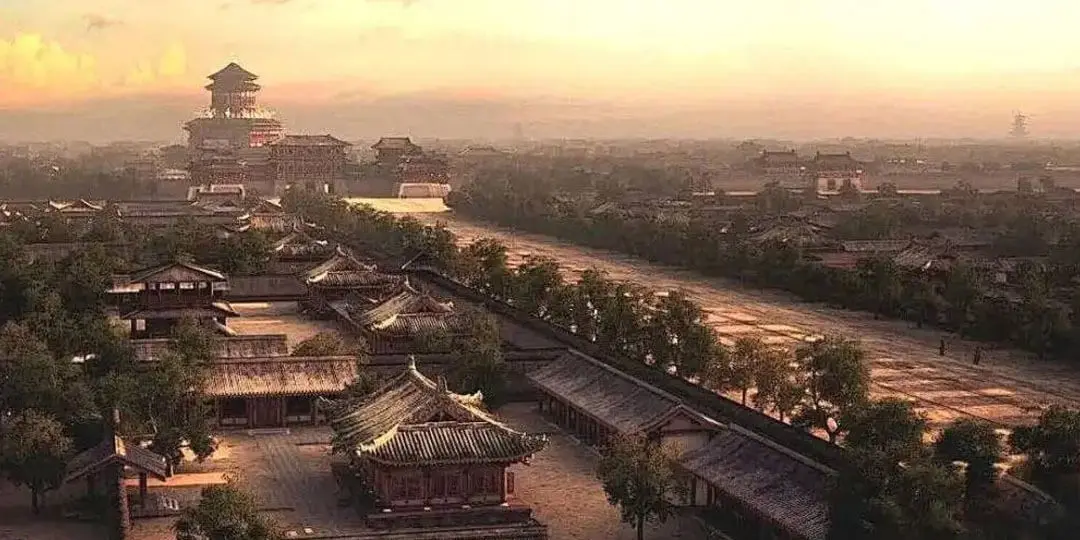
Chang'an: The Eternal Capital of Dreams and Ruins
Chang’an (modern-day Xi’an) was not just the capital of the Tang Dynasty; during the 8th century, it was the largest, wealthiest, and most cosmopolitan city on Earth. Its meticulously planned grid streets, sprawling palaces, and million-strong population made it the undisputed center of the world.
In classical Chinese poetry, Chang’an is the ultimate stage. It is the destination of every scholar’s ambition, the backdrop for the most extravagant banquets, and, tragically, the epicenter of the empire’s shattering fall.
1. The Cosmopolitan Dream
During the High Tang period, Chang’an was a beacon of global trade and cultural exchange. It was the eastern terminus of the Silk Road. In the city’s famous Western Market, you could find Persian merchants, Indian monks, Central Asian dancers, and Roman artifacts.
For poets like Li Bai, Chang’an was a playground of endless inspiration. He wrote of drinking exotic wines in the taverns of the western districts, surrounded by music and foreign beauties. The city represented a boundless confidence, where talented individuals from anywhere in the empire could arrive and potentially become a minister overnight.
2. The Epicenter of Imperial Exams
Every spring, scholars from the deepest corners of China converged on Chang’an to take the Imperial Examinations. Success meant instant glory and political power; failure meant returning home in deep disgrace.
Chang’an became synonymous with the brutal anxiety of ambition. The phrase “Spring breeze makes the horse hooves swift” (春风得意马蹄疾) was famously coined by the poet Meng Jiao after he finally passed the exams, capturing the intoxicating high of conquering the capital.
3. The Tragedy of Ruins
The golden age of Chang’an was shattered in 755 AD by the An Lushan Rebellion. Rebel forces captured the city, the Emperor fled, and the once-glorious capital was looted and burned.
This devastating loss transformed the literary meaning of Chang’an forever. The “Poet Sage” Du Fu, trapped in the occupied city, wrote the immortal lines of Spring Prospect (春望):
The nation is broken, but mountains and rivers remain; In the city in spring, grass and trees grow thick. (国破山河在,城春草木深)
From that point on in Chinese literature, Chang’an ceased to be just a physical city. It became a haunting symbol of lost glory, the fragility of human empire, and the melancholic beauty of ruins.