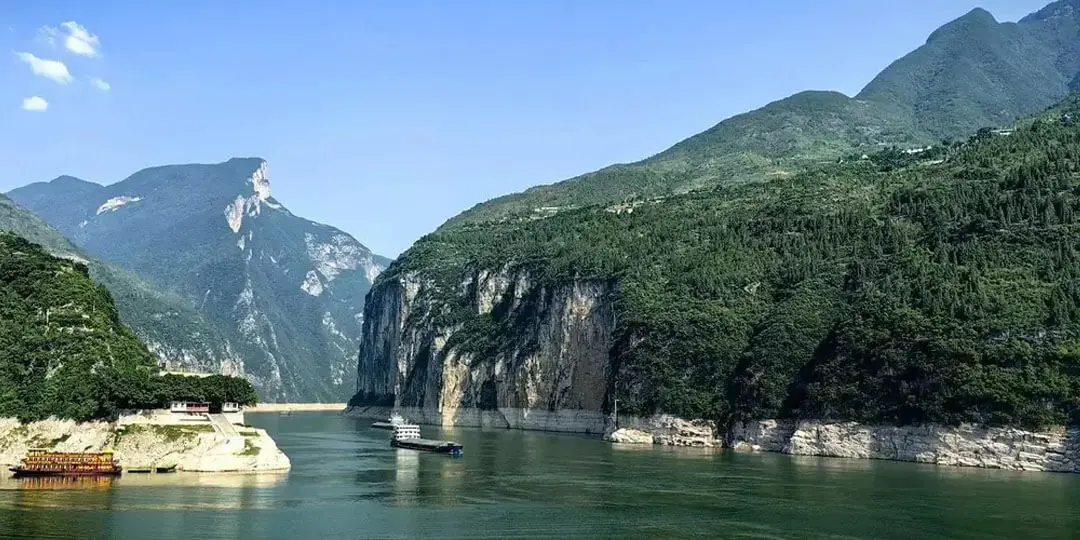
The Yangtze River: Endless Flow of Time and History
Stretching over 3,900 miles from the Tibetan Plateau to the East China Sea, the Yangtze River (长江) is the lifeblood of southern Chinese civilization.
In the realm of classical poetry, the Yangtze is more than a body of water. Its relentless east-flowing currents serve as the ultimate cosmic metaphor for the irreversible passage of time, the rise and fall of dynasties, and the tiny scale of human existence.
1. The Metaphor of Unstoppable Time
Just as a river’s water never flows backward, human youth and historical eras pass away forever. Poets gazing at the roaring waters of the Yangtze were frequently overwhelmed by existential awe.
In Du Fu’s masterpiece Climbing the Height (登高), written while he was ill and exiled near the Yangtze gorges, he writes:
Endless trees fall rustling in the boundless wind; The endless Yangtze comes rolling relentlessly on. (无边落木萧萧下,不尽长江滚滚来)
The contrast between the fragile, dying poet and the infinite, roaring river encapsulates the human condition.
2. The Stage for Battles and History
The Yangtze also served as a natural military barrier, separating northern and southern China. Great naval battles that decided the fate of empires—such as the famous Battle of Red Cliffs in 208 AD—were fought on its waters.
Centuries later, poets like Su Shi looked out over the ancient battlefields along the river and reflected on how heroes and conquerors had all vanished into history like foam on the water:
The Great River flows east, Washing away all the romantic figures of a thousand ages. (大江东去,浪淘尽,千古风流人物)
Whether witnessing joyous journeys or ancient battles, the Yangtze River stands as the silent, eternal recorder of Chinese history.